Dyslexia Friendly Classroom Training

Dyslexia Friendly Classroom Training

Happy Spring! This season marks the beginning of a growth cycle in nature, but the end of a school year cycle. It is a time to look back over our classes, reflecting on the goals set for the students during those first weeks of August and September.  Last fall, you took stock of which students would need a little extra  help breathed into them to be successful, and which ones were ready to soar with only guidance. May finds us celebrating the high fliers, and handing out awards to mark their accomplishments.  

It is a delight to teach outstanding students, but what of the plodders among our students? The ones who show up every day, but in whom the spark of our teaching efforts never quite seems to catch flame? They will sit through the awards ceremonies again this year, knowing none of the academic achievement certificates or ribbons bear their name. How is it that this outcome continues to repeat itself yearly for these few students? 

For you teachers whose reflection back over the closing school year is marred by an inability to reach those couple of lower-achieving students, let me invite you to get fresh insight into how the dyslexic students in your room approach learning, and master simple tools and techniques that work to help your students for whom learning is more difficult. The best news of all is that while the educational principles and practices I have the opportunity to share with you are great for the handful of dyslexic students in your classrooms, they are also good for the majority of your students who are non-dyslexic.  

Join me online for a course I have titled Dyslexia Friendly Classroom.  In this companion training to Orton-Gillingham approach training, I will take you through a series of read-at-your-own-pace sessions designed to give you the information every classroom teacher needs to know about dyslexia. We will begin with an overview of how dyslexia affects a student’s ability to learn in the classroom, move to specific strengths and weaknesses of dyslexia, then look at how the brain learns and how academic memory works. Next, we’ll tackle how we can form our classroom policies and organization to be more friendly to our dyslexic students. For the final two lessons, we’ll spend time learning how to make custom, teacher-created materials which are easily coordinated with your teacher manuals. 

Sign up online for 6 one to two-hour long lessons of intensive learning which will expand your understanding of how to best help the students in your next class who struggle due to dyslexia.  It could mean you will be penning their names on awards for next May’s awards ceremonies!  Three cohorts are planned for this summer, so one of the calendar spreads is sure to mesh with your summer plans. Go to https://dfc.pathwright.com/library/dyslexia-friendly-classroom-125593/about/ to sign up today!

Brenda’s Story

Brenda’s Story

Imagine a child so reluctant to write that she lays her pencil down between each word.  That child was Brenda on her first day in my fifth-grade small group. We had opened the first day of a new small group by talking about how the students felt about reading, spelling, and writing – the areas which tend to give students with dyslexia the most difficulty.  Brenda quietly let us know she liked reading, and could work on spelling, but strongly disliked writing. Brenda arrived at this dislike of writing in what is, unfortunately, the usual way.  

Her mom began noticing that Brenda had some differences in her reading compared with the older children in the family when Brenda began completing assigned reading homework in first grade.  When they read together, Brenda tended to either skip over or greatly struggle with common, high-frequency words which other children her age read with ease. If there were questions to answer about the passage, Brenda would have no idea how to answer – as if she had not listened to herself reading.  Spelling in the early years was a complete mystery to Brenda. She simply didn’t make the connection between the letters and the sounds they represented. Brenda and her mom spent a great deal of time studying and working on word lists for upcoming spelling tests only to have Brenda perform very poorly on test day.  

Being a proactive mom, Mrs. C researched possible reasons for the language struggles and took Brenda to be tested for dyslexia at the end of Brenda’s second-grade year.  The test results found that Brenda was identified with characteristics of a person with dyslexia.  Feeling she had found her answer, Mrs. C. pulled Brenda out of XYZ, the private church school she had been attending, and intended to homeschool her.  A plan for teaching Brenda to read using phonics was recommended, so Mrs. C. purchased a popular book on how parents can teach their children to read in just over three months’ time.  She had successfully homeschooled her older children, so felt prepared for the task of teaching Brenda to read.  

Brenda did not share her mom’s enthusiasm for their homeschooling endeavors.  Mrs. C. recalls how Brenda would hide the reading manual, causing time to be spent searching the house for the book so lessons could begin.  Clever even at a very young age, Brenda would find unique caches for the book every day.  Mrs. C. recalls being confused that a child bright enough to search out new hiding places couldn’t simply sit down and learn the lessons the book promised would teach her to read! 

Two years invested in homeschooling efforts had yielded a closeness between mother and daughter (as well as an intimate knowledge of all possible hidey-holes in the house!) but had not resulted in Brenda reading and spelling on grade level.  Writing had now joined the list of challenges and became Brenda’s nemesis. 

Brenda’s folks came to me at the Dyslexia Center at the end of Brenda’s fourth-grade year, looking for a different way to approach Brenda’s language instruction.  They enrolled Brenda in small group and tutoring, planning to start at the beginning of fifth grade.  

At ABC, Brenda responded positively to the open and frank discussion of dyslexia that was part of the school culture.  She seemed relieved to put a name to her struggles with language and was happy to know there was an approach to learning that would be successful for her.  One of the specific things Brenda mentioned that encouraged her was the rotating classroom display of accomplished and famous dyslexic people.  Brenda applied herself to learning and understanding the Orton-Gillingham approach lessons presented to her.  Her tutor recalls Brenda being a very hard worker who seemed relieved to learn the generalizations and logic that are hallmarks of the O-G approach. 

After completing her fifth-grade year, Brenda had made a lot of progress. She had learned to make a brainstorm box to write down key ideas she wanted to include in her writing so that creating content was separated from remembering the mechanics and spelling rules that govern writing. Even though she was not finished the program, Brenda felt she had been given the tools she needed to succeed.  She longed to return to XYZ, the school she had attended in first and second grade, feeling her closest friends were there.  Her parents enrolled her in XYZ and arranged for a private O-G trained tutor to come to the school and give Brenda tutoring lessons multiple times per week. The plan felt sound, but it was not a success. 

Brenda was dismayed to realize school XYZ did not have a culture friendly to dyslexic students. She worked extraordinarily hard to earn average grades, but her teacher did not pick up on the fact she was not thriving.  She was not allowed accommodations in the classroom, and the girls she was longing to reconnect with mocked and ridiculed her need for tutoring.  Brenda’s tutoring lessons fell during the classroom math lesson, and the teacher did not alter the schedule. Unsurprisingly, Brenda soon added math to the list of subjects in which she was flagging. Realizing the failure of school XYZ to meet Brenda’s needs, her mom chose to move Brenda back to ABC for her seventh-grade year.  

Having spent a year away from the support system and understanding culture offered by ABC, Brenda now realized what a gift that support and understanding were.  She felt bolstered by the school culture surrounded by students and teachers who understood dyslexia, at least to some degree, and where everyone accepted her. Once again, Brenda had the environment she needed to succeed.  Accommodations prevented Brenda from getting bogged down and behind.  Class notes that were provided to her by each teacher freed Brenda from the burden of trying to listen to the lecture and write the notes at the same time.  She was now able to focus on what the teacher was saying, and her grades and level of understanding soared.  Brenda was able to take advantage of writing tutoring that could be scheduled during her study period, provided by an English teacher who was O-G trained.  Brenda’s family was exposed to continuing education about dyslexia for families.  This gave the entire family a better understanding of dyslexia and how it was impacting Brenda. 

Brenda graduated from ABC as an honors student and a proud member of the school volleyball team. Brenda’s natural willingness to try new things ripened into confidence, even when success in those new endeavors was not guaranteed.  Brenda is now at a small private college studying nursing, and her grades put her on the Dean’s List.  One day, Brenda’s picture could join that rotating display of accomplished dyslexic individuals.  

Brenda’s mom offers some advice to moms of children who exhibit signs of a reading struggle.

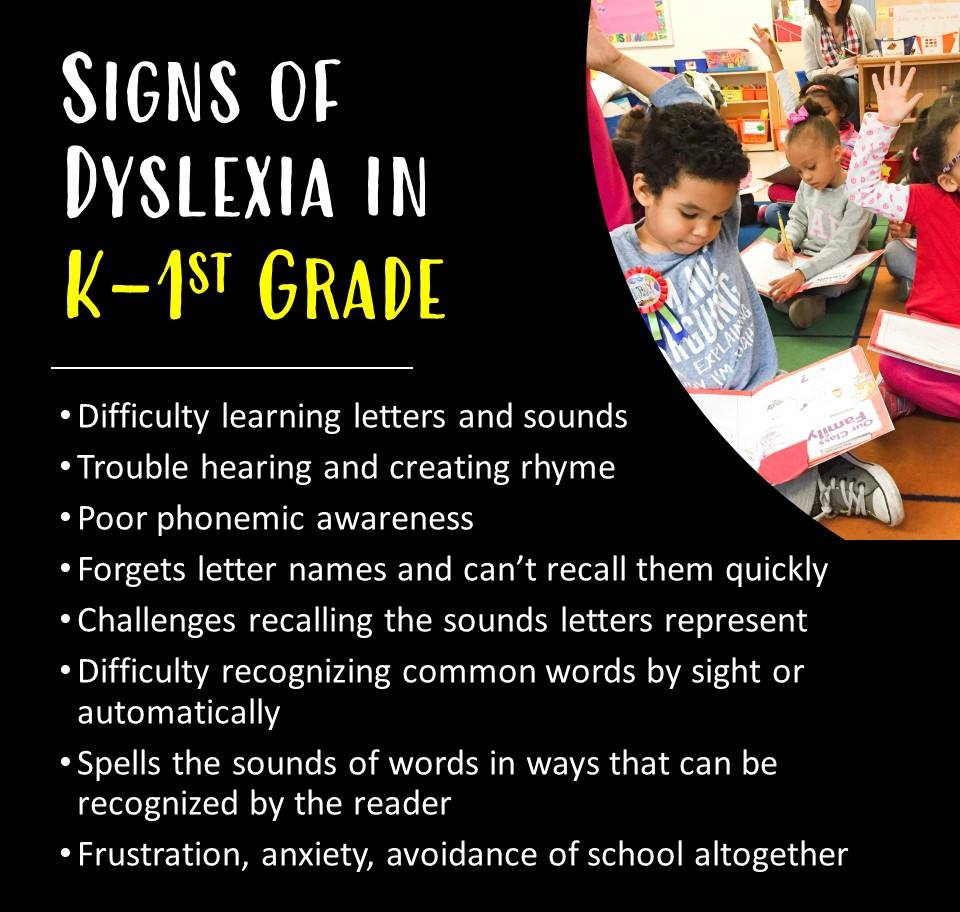
  • Know the signs of dyslexia.  
  • Know that frequently a series of small and seemingly unrelated struggles cumulatively point to dyslexia.
  • Get your child tested and start O-G tutoring as young as possible. 
  • Listen to your “mom radar” when things don’t seem to add up in a way that explains your child’s school struggles.
  • Find a school with a culture of acceptance of children who learn differently. 
  • Allow your child to participate in extracurricular activities that interest them – it can’t be ALL about studying. 
  • Know that you can petition for extra time on college entrance exams and that it can make a huge difference to have that extra time. 
  • Encourage your child to ask for and accept help rather than struggle. 
  • Encourage your college-aged child to register for accommodations at university – even if s/he does not plan to use them.  
Spelling List Help

Spelling List Help

My heart went out to the mom who posted a similar graded paper on social media along with a cry for help.

I hear your pain!

I could read the pain in the social media post as a mom lamented her daughter’s teacher sending home poor spelling tests plastered with a big red F.  It is so hard to see our children struggle!  I sent her a message with the following study plan for working that spelling list and helping her daughter own the words.  It is a big departure from the tried and true “copy your spelling list” way of studying words, but the kinesthetic and analytic elements make it work! Here is the plan, in case you want to try it for yourself. 

Get the list early

Start with a note to the teacher and request the new spelling list on Friday. The teacher will be glad you have a plan to tackle the spelling words. Both of you want the same thing – for your child to succeed.

Friday Afternoon

On Friday afternoon, have your child write each of their words large in sparkle marker or glitter glue or some other fun way on the blank side of 3×5 cards, one word per card. Help him or her scoop the syllables with a pencil under the word so s/he is thinking in syllables.(Look in a dictionary if you are unsure how to divide.) Help him or her to read the words, because it is likely s/he is struggling with that – most dyslexic students do. Look together for the common spelling patterns in the words.

Saturday

Saturday have your child “help” you discover that common spellings of groups of words. Have her sort the words into piles by common spelling rule, reading the words aloud and spelling aloud as she sorts. If s/he used glitter glue to write them out, s/he can trace them with her finger as she spells them out loud and that will help her with recall.

Sunday

On Sunday, lay out the words with the common spelling rule on its own 3×5 tent card. Have your child read and spell the words aloud, tracing the letters on the card as she says the letter names aloud.

Monday

On Monday, you can work with your child to think of a funny sentence to recall the words in each group, such as, “My neighbor got a sleigh on the freight train,” for the eigh words. Have her illustrate the sentence and write it below the illustration, touching the pictures which represent the words and then spell them aloud. Putting words with a common spelling pattern into one category will help make sense of the spellings, and the funny sentences with pictures will help with recall of what words belong in the same category.

The rest of the week

Continue working with the words each afternoon, tracing the letters and saying them aloud as she says the word. Put aside the ones she knows and concentrating on the tough ones as the week continues. These techniques will help her get very familiar with the words, and are fun as well as pencil and paper free. Spelling the words by syllable is also crucial since it helps break long words down into manageable bits.

Night Before the Test

The night before the spelling test, do a “practice test.”  Have your child number the paper, or as best you can mimic how the classroom teacher sets up her spelling test papers.  You call out the spelling words in mixed order, as the teacher will do, supporting your child by reminding him or her of the ways you have worked on this week to recall the words.  Encourage tracing the word on the table top and whispering the letters aloud if that helps.  Calibrate expectations be assuring your child that improvement is the goal, not perfection. Take a look at words your child missed to see if s/he is missing one of the spelling patterns, or leaving out a letter (meaning s/he is not hearing that sound).  Retrace the 3×5 of missed words, and reassure your child that s/he has these words in his or her brain, and can relax and let the brain carry the day tomorrow on the spelling test.  

Long term solution

The long term solution for this family and for others facing a similar situation is to get testing to see what the root of the learning struggle truly is, and get intervention targeted for that problem. There are very few one-size-fits-all solutions out there, so take time to follow the process of identifying the problem and applying the correct solution. Sooner is always better than later. Use the strategy I gave you to help while you look for the long term solution that is just right for your child’s situation.

Teacher Created Materials: Picture Card Method

Teacher Created Materials: Picture Card Method

When I was in high school, (half a century ago!) all promising soprano chorale members took private voice lessons. In Italian. I was living on a farm in central Iowa, where gathering eggs and putting up corn in August were things I knew, not singing in Italian! The idea behind voice lessons featuring words in the Italian language was teaching sopranos to reach for high notes yet keep a purity of vowel sound. I am sure it is excellent theory, but I hard time memorizing the words because I didn’t have any idea what I was singing about. Although I never made it past the “promising soprano” category in high school, I still enjoy singing – when I know what the song is saying!

My students also have a hard time memorizing what they don’t understand. Thinking through the words and finding the mental picture those words create is the missing link for my students. Unlike me with the songs in Italian, my students are working in their native language of English, but they need a mechanism to think through the passage. Enter icons and cartooning! Creating an illustration for the lines of poetry or bits of verse which are required to be repeated verbatim can be exactly what is needed.

Notice how easy memorizing a stanza of the poem “Destruction of Sennacherib” by Lord Byron becomes when one thinks of it in pictures. The pictures are designed to aid in recalling the words, not illustrating the poem’s meaning.

To use the pictures s/he has drawn to help memorize a poem, the student touches the picture as s/he says aloud the words represented by the picture. Having mental pictures to stimulate the brain to recall the associated words is quite powerful and effective! Even if you are not a fan of Lord Byron, and are hazy on who, exactly, Sennacherib was, try out this method right now to see how effective it is. Your blue wave will roll right over the poem in just a few practices!

Bends in the River

Bends in the River

Life has a funny way of surprising us, doesn’t it? I began this blog when I was in the thick of working at a school and developing the concept of a dyslexia center. Every school day brought me fun new challenges and obstacles to overcome on the way to creating a mainstream school that was friendly to dyslexic students. I had lots of stories of student funnies and sweet triumphs to share with you.

Then one day, I looked up and realized my work on building a dyslexia friendly school was successful! I was done. I could move on, knowing I could leave my decade’s long work in good hands and it would continue to thrive and meet the needs of the students and families depending on it.

So I retired. I packed my boxes, loaded my car, and stored those boxes of teaching stuff in the garage at home. I planted a vegetable garden. I finished conversations with my husband. I grew a rainbow of flowers in our yard. I went to lunch with friends. I cleaned corners in my home.

But I missed teaching kids how to read.

I picked up just a few private practice tutoring students. With joy, I used the Orton-Gillingham approach skills I knew so well, and crafted lessons to improve the language skills of my handful of dyslexic students. I loved presenting the lessons, and the students seemed to love receiving them. Their newly sharpened language skills spoke of the benefit of those tutorials.

I thought about all the many things the past decade had taught me. About the many lessons large and small I had gleaned from ten school years helping classroom teachers learn best practices for teaching dyslexic students. About the many conversations held while walking down the classroom hallway when a teacher needed me to quickly clarify some area of classroom life in which the students with dyslexia needed just a small tweak to help their school life run more smoothly. About the conversations from new family interviews where I heard heart wrenching stories of how very wrongly school had gone for their child with dyslexia – wrongs that could have been avoided if the teacher had just understood how to run a dyslexia friendly classroom. I wished I had a thousand decades to give to creating a thousand schools as friendly to students with dyslexia as the one I had just retired from.

The fish quote came to my mind.

“Give a man a fish and you will feed him for a day. Teach a man to fish, and you have fed him for a lifetime.”

Confucius

That was my next bend in the river. Time to give fishing lessons. Not literal fishing lessons, of course. Lessons for teachers (and interested school administrators) about how to have a Dyslexia Friendly Classroom.

The material for developing the course spent several months in the form of Post-it notes scattered across the wall of the spare bedroom I use as my home office. I added, deleted, rearranged and thought about how to structure the course. Clipboards held ideas for the structure of each day’s lessons.

Eventually it gelled into a one hundred page training manual. A sponsor was secured for the first training cohort, which was in person, and schools registered teachers to attend. The reaction of the teachers from that first week of training let me know this was an idea with legs. I pressed forward to develop a half dozen of the training week modules into an online course, which premiers next week.

The fishers are being taught. Those teachers will learn how to establish their own Dyslexia Friendly Classrooms.

My blog posts will follow this bend in the river. Expect to see posts with recommendations on books to read, ideas for teacher (or parent) created materials that allow a student with dyslexia to process school material in a way conducive to his or her needs. Let me tell you stories of surprises from training sessions, and of successes shared by the teachers who report back on how it went at school as they implemented what was learned during the trainings. I have facts to share about dyslexia. Perhaps a funny student story will sneak its way into an occasional blog post.

Thanks for staying in the canoe with me as we explore what is around this bend in the river.

What I Need

What I Need

Tiffany Jones from Nessy has put out a new book about what dyslexia is, how it feels, and what students who are dyslexic need. For a short time, it can be read on-line here. Bring it up, make some popcorn and scroll through it with your child. If Leah Heming’s whimsical, school-in-outer-space illustrations don’t make you smile, I am going to worry about you. Check it out today!

Awesome Spelling App

Awesome Spelling App

A decade ago, when I stepped into the role of dyslexia center director for a school, the problem of my dyslexic students’ poor spelling was the second problem brought to my attention by classroom teachers. The first problem was that my students were not an easy fit into the established routine of the elementary classroom, but that is a long story for another time!

Poor spelling is a hallmark of dyslexia, going arm in arm with reading difficulties. Solving that problem became Job One for me, if I were to win over the classroom teachers who were unable to decipher sentences written by the students with dyslexia. Word lists helped, but were a lot of trouble and kept getting repurposed then subsequently lost. One year students in the Dyslexia Center produced a short film, and sold copies to raise money to purchase small, hand held electric dictionaries. These were a huge leap forward from word lists or the useful but painfully titled “Bad Spellers’ Dictionary.” The problem with them was battery life and preloaded games. You can see where I am going with this, can’t you?

Enter, the App Store. A lot of progress has happened in the decade since I first hung my “Dyslexia Center” sign on the single classroom of an elementary school with a very brave principle. There are now excellent choices for spelling aid apps which can be purchased for about five dollars and instantly put onto one’s phone or tablet for quick access. A favorite of mine is called “Easy Spelling Aid.” It is $4.99 from the App Store. It has a very simple screen with a microphone icon which is touched, then the word one desires to have spelled is simply spoken. The correct spelling appears seconds later. Homonyms can be spoken in a contextual phrase so you get the correct spelling. Here is a You Tube explaining how it works. For a dyslexic speller, it is the best way five dollars can be spent today!

Taxi, the Canine Tutoring Assistant

Taxi, the Canine Tutoring Assistant

The summer Taxi the yellow lab puppy came to live in our home, I was spending my days at our kitchen table, tutoring children varying in ages from 4 to high school.  All my students have dyslexia, a learning difference which makes it difficult to learn to read and spell. Dyslexic individuals can master language skills, but it requires a several years long tutoring commitment.   Going to tutoring during the summer is about as popular with my students as going to bed early, so we thought a puppy in the house would add a fun element to the tutoring for the students.  

It worked out great, and Taxi’s house training trips to the yard happened every hour on the hour, when one student finished up and the next one arrived.  There is not much more enticing to a child than the sight of another child in the yard with a puppy, and you know your turn is next!  Taxi’s magnetism didn’t stop at the yard though.  

Harrison, one of my funny, awkward first grade pupils, adored Taxi. He sweet talked his long-suffering mother into arriving early for his lesson just so he could be sure to get his full five minutes of yard time with Taxi.  Harrison would fling his tutoring notebook onto my porch, take his turn leading Taxi around the yard in search of the perfect spot, then proudly carry her inside, crooning softly into her ear as they walked along.  

Not wanting his puppy time to end as we settled into the lesson, Harrison began to ask for ways that Taxi could help him learn better. Employing multi-sensory methods is part of the tutoring methodology for dyslexic learners. A fabric covered foam core board referred to as a fuzzy board was one tools I used each lesson.  It didn’t take very long before – you guessed it- Harrison had Taxi up in his lap, carefully tracing his irregularly spelled words onto her silken fur.  

Harrison graduated from high school last May.  I recently ran into him, and after assuring me he was college bound in the fall, he asked about Taxi.  To his delight, I was able to attest that she lives on, although no summer has ever been as magical for her as that first one, when she took on the role as Taxi, the canine tutoring assistant!

Advice for Newbies

Advice for Newbies

This article by dyslexia expert Kelli Sandman-Hurley is full of great advice for parents of children who have been recently identified as dyslexic. There are a lot of first steps here, from information on exactly what dyslexia is to questions to ask a tutor when you interview one to work with your dyslexic child. Once again, Dr. Sandman-Hurley does not disappoint!